Three contractors come to your home. They look at the same kitchen, hear the same vision, and walk the same square footage. The quotes come back at $22,000, $38,000, and $61,000.
The first reaction most homeowners have is that the high quote is gouging them. The second reaction is that the low quote sounds like a good deal. Both reactions are usually wrong, and the gap between those three numbers is one of the most important things to understand before you sign any contract.
This is a guide to what actually drives the price difference between budget remodeling, mid-market remodeling, and premium remodeling in the Beavercreek and broader Dayton market. The goal is not to argue that more expensive is always better. The goal is to help you understand exactly what you are getting at each price point so you can choose the right level of investment for your specific home and your specific goals.

What “Budget Remodeling” Actually Buys You
Budget remodeling is a real market segment with real customers and real reasons to exist. For rental properties being prepped for new tenants, starter homes where the owner plans to move in two years, or investment flips, budget remodeling makes economic sense.
What you get at the budget tier:
- Builder-grade materials chosen for lowest cost rather than longest life
- Standard-size cabinets and vanities from large manufacturers, often particleboard with thermofoil finishes
- Laminate or low-tier quartz countertops
- Off-the-shelf fixtures from big-box retailers
- Minimum permitted scope (fixture replacements rather than layout changes)
- Often, no design consultation beyond a brief in-home walkthrough
- Faster crews working through more projects per month
- Limited warranties (often six months to one year on labor)
What you do not get at the budget tier:
- Detailed scoping that catches problems before they become surprises
- Custom solutions for non-standard spaces, which describes most older Beavercreek homes
- Premium materials with 20-plus year lifespans
- Project management beyond the basics
- Robust warranties that survive when something goes wrong three years later
- Insurance coverage at the levels professional contractors carry
Budget remodeling works when the project is genuinely simple, the home does not need to last decades, and the homeowner accepts that they are buying a refresh rather than a long-term solution. Where it fails is when homeowners pay budget prices expecting premium outcomes. That gap is where most remodeling disputes originate.

What “Premium Remodeling” Actually Buys You
Premium remodeling is not about gold faucets and exotic stone. It is about a fundamentally different approach to the project at every stage. The materials matter, but the process matters more.
What premium remodeling actually includes:
Real design and scoping work upfront. A premium contractor spends meaningful time at your home before quoting. They measure precisely, document existing conditions, identify hidden problems like outdated wiring or undersized plumbing, and walk through your goals in detail. The quote that comes back reflects what the project actually requires rather than a guess based on similar past projects.
Materials chosen for longevity rather than initial cost. The difference between a $300 vanity and a $1,200 vanity is not just appearance. It is the difference between particleboard that swells when water gets to it and solid wood that holds up for 25 years. It is the difference between thermofoil that peels in five years and painted maple that can be refinished. Across an entire kitchen, the material upgrade alone often runs $8,000 to $15,000, and it is one of the biggest line items separating budget and premium tiers.
Trade quality you can verify. Premium contractors use experienced tradespeople, often with documented training and certifications. The plumber on a premium project has 15 years of experience and works for the contractor regularly. The electrician understands current code and pulls a permit for their work. The tile setter has done hundreds of installations and uses proper backer board, waterproofing membranes, and cure times. None of this is visible in the finished project, but all of it determines whether the work lasts.
Project management that actually manages. A premium contractor sequences trades correctly, schedules deliveries to match the build calendar, calls for inspections proactively, and communicates with you throughout. The reason premium projects finish on time is not that the crews work faster. It is that the project manager prevents the cascading delays that turn a six-week project into a four-month ordeal.
Detailed contracts and change order processes. You sign a contract that specifies materials by brand and model, includes a clear payment schedule tied to milestones, and lays out exactly what happens when scope changes. Surprises are handled in writing before work begins, not negotiated after the fact.
Warranties that mean something. Premium contractors stand behind their work with multi-year labor warranties and clear processes for filing claims. The warranty is not a slogan. It is a contractual commitment backed by an insured, established business that will still be operating five years from now.
Insurance and bonding that protects you. Premium contractors carry general liability insurance, workers compensation for all employees, and often bonding for larger projects. This protects you from being held personally liable if a worker is injured on your property, and protects your project if the contractor fails to complete the work for any reason.
The price difference between budget and premium reflects all of this. It is not markup. It is the cost of doing the project the way it should be done.
What “Mid-Market” Means and Why It Exists
Most actual remodeling work in the Beavercreek and Dayton area happens in the mid-market tier, which sits between the two extremes. Mid-market contractors deliver substantially higher quality than budget contractors without the overhead of full luxury operations.
What mid-market looks like in practice:
- Quality materials that fall short of designer brands but significantly exceed builder-grade
- Skilled crews with real experience but not necessarily the highest-cost specialists in the region
- Genuine design conversations without dedicated design staff
- Detailed contracts with clear scope and change order processes
- Standard warranties (one year labor minimum, manufacturer warranties on materials)
- Full insurance coverage and proper permitting
- Honest scoping that catches major problems but may not anticipate every minor surprise
Mid-market is where most Beavercreek homeowners should actually be shopping. The homes in this market (median value around $239K in Kettering, $250K in the broader Miami Valley) typically do not justify true luxury remodeling spend, but they absolutely justify quality work that lasts decades.
Dream Big Contracting LLC operates in the upper mid-market tier. Our work uses quality materials, skilled trades, proper permitting, and meaningful warranties, without the showroom overhead and designer markups of pure luxury operations. That positioning matches the actual housing stock in our service area and the actual remodeling needs of our clients.
A Real Example: Three Kitchen Quotes
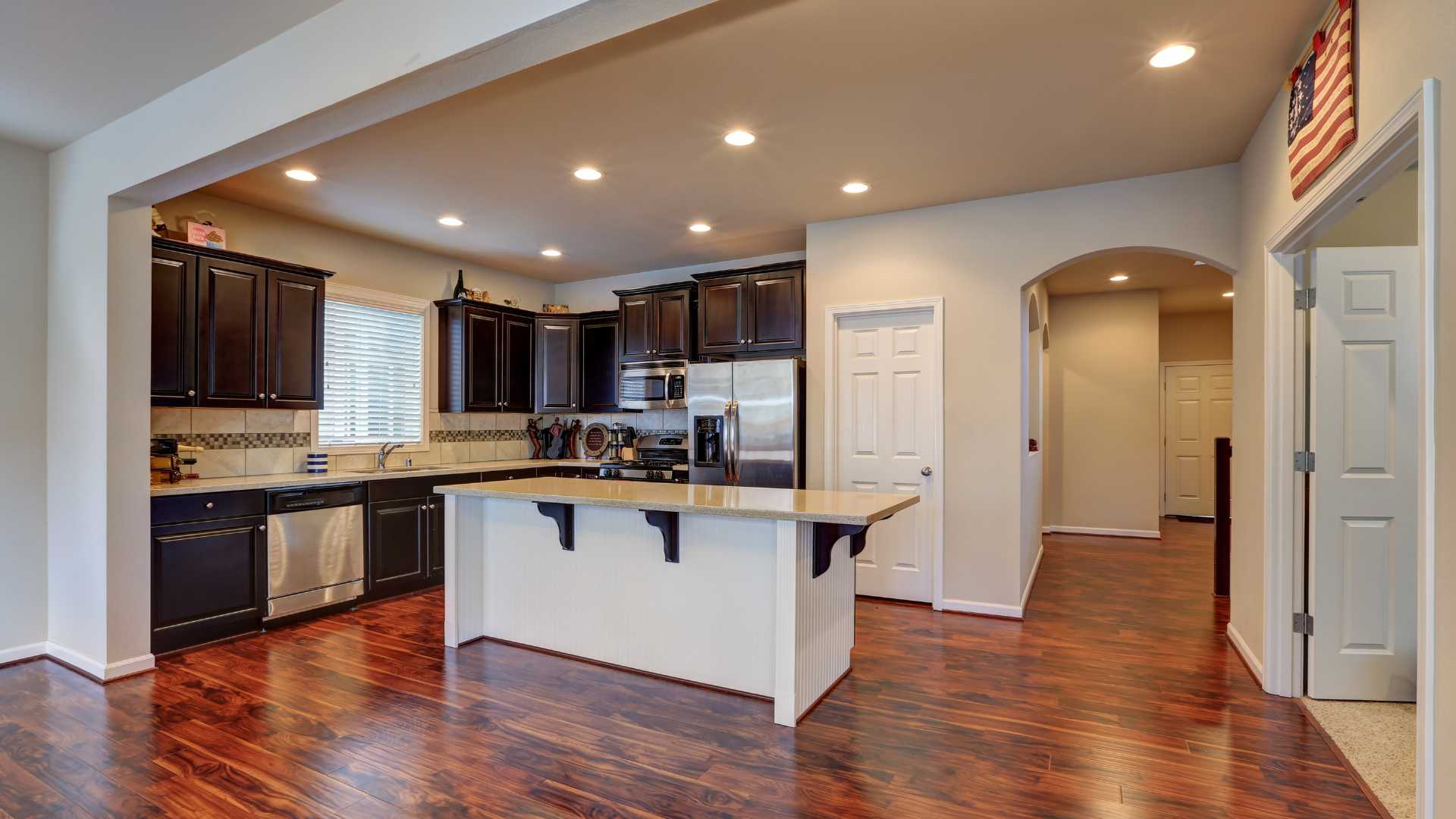
Consider a kitchen remodel in a 1980s Beavercreek ranch home. Existing footprint stays the same, cabinets and counters get replaced, electrical gets brought up to current code, new flooring goes in, and the wall between kitchen and dining gets opened up.
Budget quote:
- Stock white cabinets from a big-box supplier, particleboard with thermofoil
- Builder-grade quartz countertop
- Vinyl plank flooring at the low end of the quality range
- Two new outlets, no electrical upgrades
- Wall opening done without proper header sizing analysis
- No design consultation, basic measurements only
- Permits not pulled or pulled by the homeowner
- Six-month labor warranty
Mid-market quote :
- Semi-custom plywood-box cabinets with painted maple doors
- Mid-tier quartz countertop with full slab undermount sink area
- Mid-grade luxury vinyl plank flooring with proper underlayment
- Full electrical update for the kitchen area including dedicated circuits
- Proper structural analysis for the wall opening, engineered header
- Detailed design consultation with cabinet layout drawings
- All permits pulled in contractor name, all inspections handled
- One-year labor warranty plus manufacturer warranties
Premium quote :
- Custom cabinets, dovetail drawers, soft-close throughout, premium hardware
- High-end quartz or natural stone with custom edge profile
- Hardwood flooring or top-tier LVP with sound dampening
- Full electrical update plus under-cabinet lighting, smart switches, USB outlets
- Architectural drawings for the wall opening with engineering stamp
- Multi-session design consultation with 3D renderings
- All permits, inspections, plus pre-construction protection of adjacent rooms
- Three-year labor warranty plus manufacturer warranties
The budget quote is the same kitchen at a glance. The premium quote is the same kitchen that still looks great in 2040. The mid-market quote is what most Beavercreek homeowners actually want when they understand what each tier delivers.
How to Choose the Right Tier for Your Home
The right tier depends on three things, and none of them is your taste in finishes.
- How long are you staying in the home?
If you are selling within three years, mid-market is almost always the right tier. Premium upgrades rarely return their full cost at resale in this price band. Budget upgrades read as cheap to buyers and can hurt the perceived value of the home.
If you are staying 10 or more years, premium upgrades pay you back every day you live with them. Quality materials are quieter, easier to clean, and more pleasant to use. The $15,000 you would have saved by going mid-market is split across 3,650 days, which works out to about four dollars a day. Most people would happily pay four dollars a day for a kitchen they enjoy.
- What does your home value support?
A useful guideline: total remodeling investment in any single project should generally not exceed 15 percent of your home’s current value if resale is part of your plan. For a $300,000 Beavercreek home, that suggests a kitchen budget ceiling around $45,000. Going significantly higher than this means you are spending for your own enjoyment, which is fine, but not for resale value.
- What is the actual condition of your home?
Older Beavercreek homes (1960s and 70s housing stock is common) often hide problems that surface only when walls open up. Galvanized supply lines, outdated electrical, sistered joists, asbestos floor tile, and undersized panels are all realistic possibilities. Premium and mid-market contractors carry contingency for these surprises in their quotes. Budget contractors typically do not, which means change orders eat the savings the moment something unexpected appears.
The Real Cost of Choosing the Wrong Tier
Going premium when your project does not need it costs money you did not have to spend. That is the smaller risk.
Going budget when your project actually needs mid-market or premium has bigger consequences. Common outcomes from misaligned budget remodels:
- Materials fail within two to five years, requiring re-do work that costs more than the original premium quote would have
- Hidden problems get covered up rather than fixed, surfacing later as water damage, electrical issues, or structural failures
- Unpermitted work shows up during home sale inspections, killing deals or requiring expensive after-the-fact compliance
- Warranty claims go unanswered because the budget contractor is no longer in business
- The finished project never quite feels right, which leads to redo work within a few years
The math almost always favors right-sizing the project rather than under-investing. If the budget will not support quality work, the right answer is often to scope down the project rather than scope down the quality.
The Bottom Line for Beavercreek Homeowners
The three quotes at the start of this post are not three options at the same level of quality. They are three different services. The budget quote buys you a refresh that will last three to five years. The mid-market quote buys you a renovation that will last 15 to 20 years. The premium quote buys you a renovation that will outlive your time in the home.
Knowing which tier matches your situation is the most important decision in the entire project. Pick the right one and the rest of the process is mostly logistics. Pick the wrong one and the project struggles from the first day.
Dream Big Contracting LLC operates in the upper mid-market tier, serving Beavercreek homeowners who want quality work that lasts decades without paying for luxury overhead they do not need. If you are weighing remodeling options for your home and want an honest read on which tier actually fits your situation, reach out for a consultation. We will walk through your goals, your home, and your timeline, and tell you straight whether we are the right fit. Sometimes the answer is yes. Sometimes the honest answer is that your project would be better served by a different tier entirely, and that conversation is worth having before any contract gets signed.
The right contractor for your project is the one who matches your project’s actual needs. The work starts with knowing what those needs are.