
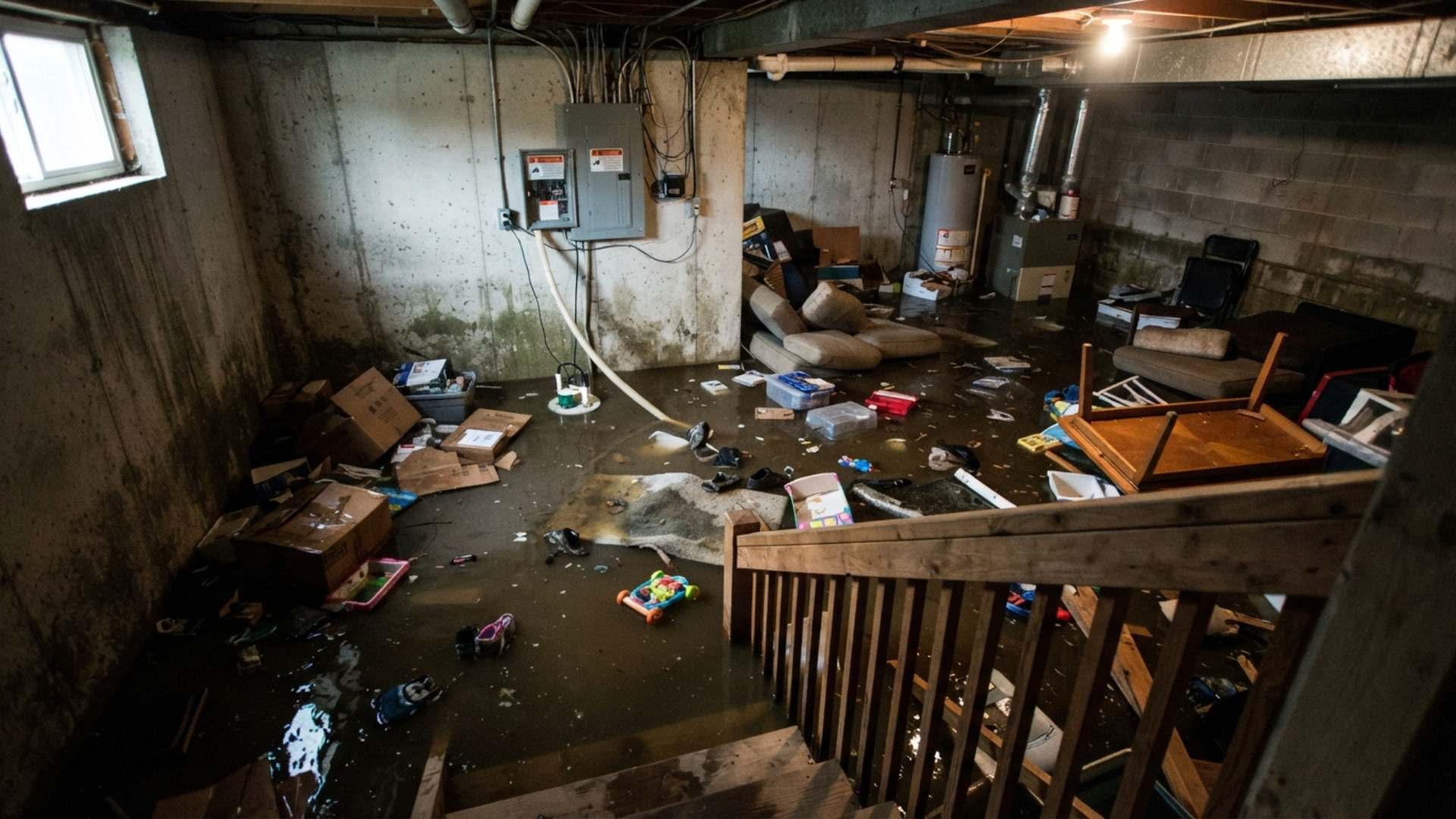
Late summer thunderstorms hit the Dayton area hard. When several inches of rain fall in a single evening across Beavercreek, Fairborn, and the surrounding parts of Greene County, basements are usually the first place homeowners find the damage. If your basement took on water this summer and you are now thinking about finishing it, or tearing out soggy drywall and re-finishing it, there is a right way and a wrong way to proceed. The wrong way can cost you at resale, at inspection, and sometimes at the insurance claim stage.
This guide covers what Greene County actually requires before you close up those walls, and why skipping the paperwork after water damage is a bigger risk than most homeowners realize.
Yes, You Need a Permit to Finish a Basement in Greene County
Finishing a basement is not a cosmetic project in the eyes of the county. Once you add framing, electrical circuits, plumbing, HVAC extensions, or new living space, you are performing regulated construction under the Residential Code of Ohio. In unincorporated Greene County, permits run through the Greene County Building Regulation Department. If you live inside city limits, Beavercreek and Fairborn each administer their own permitting, so where your home sits determines which office you call first.
A typical finished basement project requires a building permit plus separate electrical and, if applicable, plumbing and mechanical permits. Homeowners can often pull their own permits for owner-occupied homes, but any hired contractor handling electrical, plumbing, or HVAC work in Ohio must hold the appropriate OCILB license.
Re-Finishing After Water Damage Is Still Permitted Work
This is the part that surprises people. If a storm ruined your existing finished basement and you are replacing drywall, insulation, and flooring, many of those repairs can trigger permit requirements too, especially if you are opening walls, replacing electrical components, or changing the layout. Treating a flood repair as a quiet weekend project is how homeowners end up with hidden mold, unpermitted wiring, and disclosure problems when they sell.
Fix the Water Problem First, Then Schedule Inspections
No inspector wants to approve a finished basement that will flood again next August. Before framing begins, the moisture source needs to be identified and corrected. In our area that usually means one of the following:
- Grading that slopes toward the foundation instead of away from it
- Clogged or short downspouts dumping roof water at the foundation wall
- Hydrostatic pressure in the clay-heavy soils common across Greene and Montgomery counties
- A failed or missing sump pump system
- Foundation cracks that widen with seasonal soil movement
Once the water issue is resolved, the county inspection sequence for a finishing project generally follows framing, rough electrical, insulation, and final inspections. Each stage must be approved before you cover the work. Closing up a wall before rough-in approval means opening it back up.
Why Documentation Protects You Later
A permitted, inspected basement finish creates a paper trail that matters in three situations: selling your home, filing a future insurance claim, and passing a buyer’s home inspection. Unpermitted basement finishes are one of the most common flags Dayton area home inspectors raise, and remediating them after the fact is almost always more expensive than doing it correctly the first time.
One more thing worth knowing: if your basement has or will have a bedroom, sleeping areas below grade come with emergency escape requirements under Ohio code. That is a separate topic with its own sizing rules, and if your window wells flooded during the same storms that soaked your basement, it deserves its own attention. We cover it in detail in our guide to window well flooding and Ohio egress requirements.
Frequently Asked Questions
Do I need a permit to finish a basement in Greene County, Ohio?
Direct answer: Yes. Finishing a basement in Greene County requires a building permit, and usually separate electrical, plumbing, and mechanical permits depending on the scope.
Key details: Unincorporated areas go through Greene County Building Regulation, while Beavercreek and Fairborn homeowners apply through their city building departments. Work performed by hired trade contractors must be done by OCILB licensed professionals.
Expert insight: The most common mistake we see is homeowners framing and drywalling first, then calling about permits. Inspections happen in sequence, so covered work has to be reopened, which doubles labor costs.
Next step: If you are planning a basement finish in the Dayton area, talk to a local contractor who handles the permitting process before any framing starts.
Can I finish my basement after it flooded?
Direct answer: Yes, but only after the source of the water intrusion is diagnosed and corrected. Finishing over an unresolved moisture problem leads to mold and repeat damage.
Key details: Common causes in Greene County include negative grading, downspout discharge at the foundation, hydrostatic pressure in clay soil, and failed sump systems. Materials that got wet, including drywall and fiberglass insulation, should be removed rather than dried and reused.
Expert insight: In older Beavercreek homes we often find the real culprit is a downspout extension that was removed years ago during a landscaping project. The cheapest fix is sometimes the most effective one.
Next step: Have a moisture evaluation done before you budget the finish work, so waterproofing costs are known up front.
What inspections are required when finishing a basement in Ohio?
Direct answer: A typical basement finishing project requires framing, rough electrical, insulation, and final inspections, with plumbing and mechanical rough-ins added when those trades are involved.
Key details: Each inspection must pass before the next stage of work covers it. Your permit paperwork from the county or city office lists the required sequence for your specific scope.
Expert insight: Scheduling inspections is where DIY projects stall. A contractor who works in Greene County regularly knows each jurisdiction’s lead times and can keep the project moving without dead weeks.
Next step: Ask any contractor you interview to walk you through the inspection sequence for your project before signing.
How long does a basement finishing permit take in Greene County?
Direct answer: Residential basement permits in the Greene County area are commonly reviewed within one to three weeks, though timelines vary by jurisdiction and season.
Key details: Beavercreek, Fairborn, and the county office each have their own review queues. Submitting complete drawings with electrical layouts and egress details the first time avoids resubmission delays.
Expert insight: Late summer and fall are peak submission seasons locally, since homeowners want basements finished before the holidays. Applying earlier in the summer usually means a faster review.
Next step: Confirm current review times with your jurisdiction, or work with a contractor who submits permits in Greene County every month and can set a realistic schedule.
Dream Big Contracting LLC is a veteran-owned remodeling company serving Beavercreek, Dayton, and Fairborn. If your basement project needs a contractor who handles permits, inspections, and moisture problems the right way, learn more about professional basement finishing in Beavercreek.